

On Saturday, November 21, 2026, President Donald Trump said he would work with the incoming Democratic Congress to cap credit card interest rates at 10%, the Associated Press reported. Asked about it in a phone interview on Fox News’ “Saturday in America,” he said, “I would do it. These credit card companies have made a lot,” according to Mediaite’s transcript of the interview. He added, “I’m all into it.”
If you carry a balance, that sounds like great news. But a promise isn’t a law. Here’s what’s actually on the table, how much it could matter to your wallet, and what you can do about high-rate debt right now, without waiting on Washington.
Where things stand today
As of November 23, 2026, no cap has been passed, and no new bill or timetable came with Saturday’s comments. This isn’t the first time the idea has come up. On January 9, 2026, Trump posted on Truth Social that he was “calling for a one year cap on Credit Card Interest Rates of 10%,” effective January 20. No cap followed, as Federal Reserve rate data from later in the year show.
Congress has written bills on it before. The 10 Percent Credit Card Interest Rate Cap Act (S. 381), introduced by Senator Bernie Sanders in February 2025, would cap card APRs at 10% until January 2031. Its latest action on Congress.gov is still its February 2025 referral to the Senate Banking Committee. The Congressional Research Service puts it plainly in its March 2026 brief on rate caps: “Currently, there is no general national cap on card interest rates.” It adds that any restrictions “would generally require legislation in order to be binding.” The new Congress takes over in January 2027.
What 10% would mean in real dollars
The gap is big. In the third quarter of 2026, the average rate on credit card accounts that were actually charged interest was 22.36%, according to the Federal Reserve’s consumer credit report released November 6. Across all accounts, it was 21.19%.
Take a $6,000 balance held steady for a year. At 22.36%, that’s roughly $1,340 in interest. At 10%, it’s about $600. That’s a difference of around $740 a year, before you’ve paid down a dime of the balance itself. And Americans carry a lot of it. Credit card balances reached $1.29 trillion in the third quarter, up $22 billion from the quarter before, the Federal Reserve Bank of New York reported on November 10.
The catch nobody puts on a bumper sticker
A cap could save borrowers real money, but it could also change who gets credit. The same CRS brief says it’s possible that card issuers “would limit their credit card business or change their pricing,” and that banks “may also choose to limit credit products or add auxiliary fees” to make up for lost interest. In plain English, a cap could mean lower credit limits, stricter approvals, or new fees, and it could hit people with weaker credit the hardest. That’s a real tradeoff, and it’s one reason the idea has stalled before.
What to do while Washington talks
Here’s the part you control. None of these steps depend on a law passing.
- Call your card company and ask for a lower rate. The Consumer Financial Protection Bureau notes in its guide to consolidating credit card debt that some creditors may be willing to “reduce your interest rate” or waive certain fees. It’s a five-minute call.
- Look at a balance transfer carefully. A 0% or low-rate offer can buy you time, but the CFPB says you’ll probably pay a balance transfer fee, usually a percentage of the amount or a fixed amount, whichever is more. An introductory rate has to last at least six months unless you’re more than 60 days late. Don’t put new purchases on that card, because, the CFPB says, they won’t get a grace period.
- Pay the highest-rate card first. Make the minimum on everything, then send every extra dollar to the card with the biggest APR.
- Get free help if it feels like too much. The CFPB points people to nonprofit credit counselors, who can help you build a budget and a payoff plan.
- Don’t add to the balance while you wait. A cap that may or may not come in 2027 won’t fix a balance that keeps growing in 2026.
One of the first money lessons I took to heart as a Primerica client back in 1999 was simple: high-interest debt works against you every single day, so pay it down before you try to get ahead.
The Bottom Line
A 10% cap would be a big deal for millions of households, but as of November 23, 2026, it’s still talk, not law. So here’s the question worth sitting with: if your card rate never drops, what’s your plan to pay that balance off anyway? What would change if you made one phone call this week, or picked one card to attack first? Start there, and check back with DailyFinancialNews.com as this debate moves into the new Congress.
One small favor: would you add DailyFinancialNews.com as a preferred source on Google? It only takes a few seconds, and it really helps.
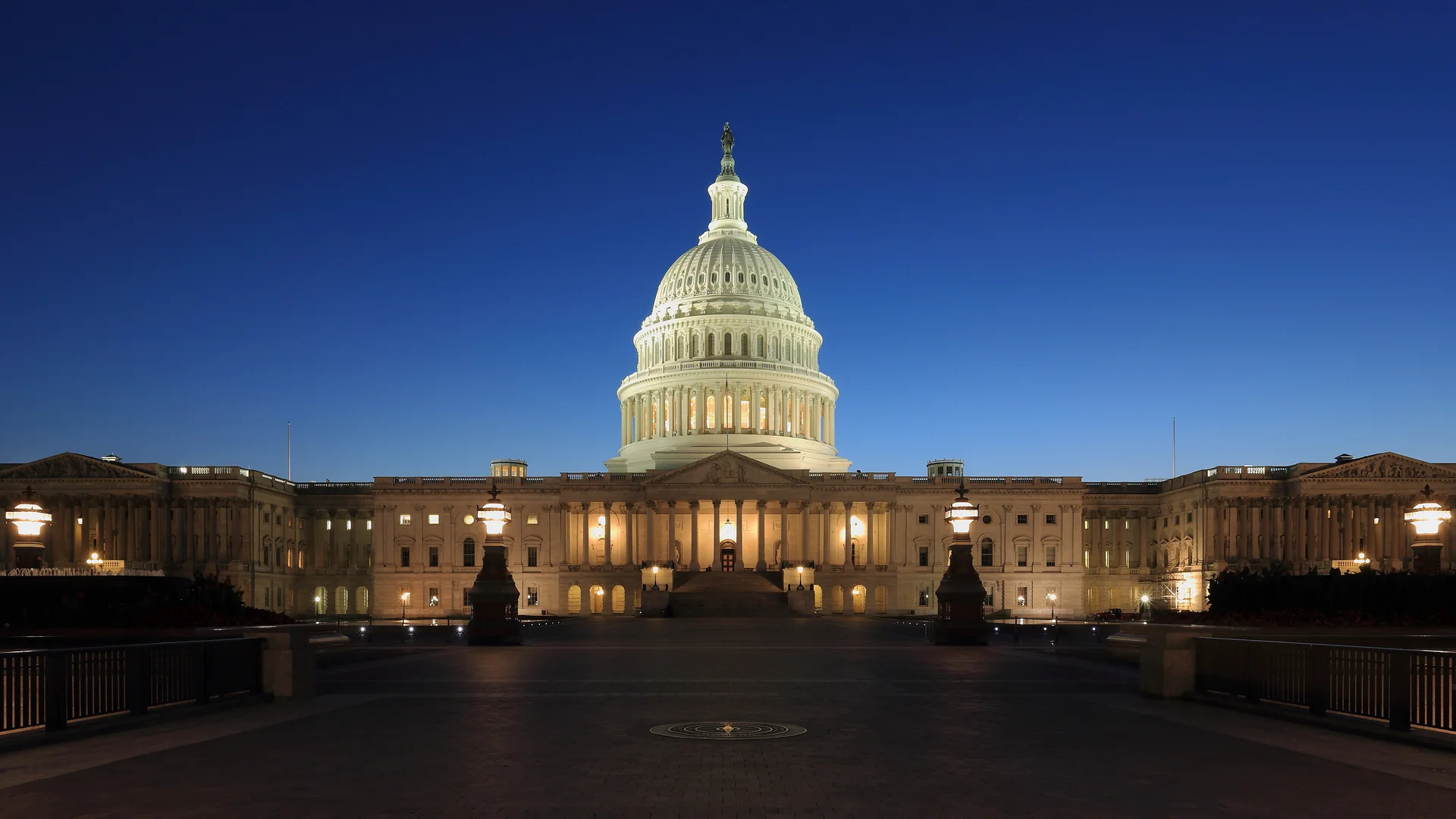
Photo: U.S. Capitol east front at dusk, cropped. Martin Falbisoner via Wikimedia Commons, CC BY-SA 3.0.
Sources and Further Reading
- Associated Press, “Trump vows to work with Democrats to cap credit card interest rates at 10%,” November 21, 2026
- Mediaite, “‘I’m All Into It’: Trump Says He’s Definitely Down to Work with Democrats on Capping Credit Card Rates,” November 21, 2026
- Donald J. Trump, Truth Social post, January 9, 2026
- Congress.gov, S. 381, 10 Percent Credit Card Interest Rate Cap Act (119th Congress)
- Congressional Research Service, “Interest Rate Caps on Credit Cards: Policy Issues” (IF12861), updated March 10, 2026
- Federal Reserve, G.19 Consumer Credit release, November 6, 2026
- Federal Reserve Bank of New York, Quarterly Report on Household Debt and Credit, Q3 2026, November 10, 2026
- Consumer Financial Protection Bureau, “What do I need to know about consolidating my credit card debt?”
- Consumer Financial Protection Bureau, “How long can I keep a low rate on a balance transfer or other introductory rate?”