

On November 17, 2026, the Treasury Department and the IRS issued final regulations on a SECURE 2.0 rule that requires certain new 401(k) and 403(b) plans to automatically enroll eligible employees. If you’re starting a job, you may be contributing before you’ve had a chance to sit down and decide. That’s the point of the rule. It’s also why the default rate is worth a second look.
The official releases say covered plans generally must enroll eligible employees at a 3% contribution rate. After an initial period, that default rate generally has to rise by at least one percentage point a year until it reaches at least 10%, and the default cannot go above 15%. You can opt out, or you can pick a different amount.
That summary is right as far as it goes. A few details in the Federal Register matter if this is your paycheck.
What the rule actually covers
This is not a rule for every 401(k). The statute applies to new 401(k) and 403(b) plans, meaning plans established on or after December 29, 2022, the day SECURE 2.0 became law. Plans already in place before that date are generally exempt.
So are governmental plans, church plans, and SIMPLE 401(k) plans. A business that, including any predecessor, has been in existence for less than three years is also exempt while it is new. Smaller employers get time too: the auto-enrollment requirement does not apply until the first plan year that begins at least 12 months after the employer first has a taxable year in which it normally employed more than 10 people.
The starting default is not simply “3% or more.” The law sets the initial default at no less than 3% and no more than 10%. Then it escalates.
Timing is easy to mix up, because two clocks are running. The underlying law already applies to plan years beginning after December 31, 2024. The final regulations themselves generally apply to plan years beginning after December 31, 2027. Until then, the Federal Register says employers should follow a reasonable, good-faith reading of the statute. The IRS noted that the later date gives employers time to make administrative changes. If you’re walking into a new job at a company with a new plan, you may already be auto-enrolled.
Treasury and the IRS estimate that about 1.5 million taxpayers a year, on average from 2023 through 2032, will be directly affected by the regulations, along with about 25,000 retirement plans a year. They separately estimate that about 2.2 million taxpayers and 31,600 plans will benefit from the added clarity, and that the auto-enrollment expansion will raise retirement savings by an average of $4.2 billion a year over that period.
Why 3% may be too low for you
A 3% default can look painless on a first paycheck. It may still leave money on the table.
In Vanguard’s How America Saves 2026 report, the most common employer match in its plans, and the one covering the most Vanguard participants, was 50 cents on the dollar on the first 6% of pay. If you stay at 3%, you capture only half of that match. Among Vanguard automatic enrollment plans, 62% already defaulted employees at 4% or higher in 2025, and 31% chose a default of 6% or more. The average participant deferral rate was 7.6%. The legal minimum is a floor, not a target.
Do you know whether your employer’s match starts after 3%, or whether it keeps going until you put in more?
That question is worth asking in the first week, not after the default has been running for a year. Auto-enrollment is designed to get you in the door. It is not designed to pick the rate that fits your age, your debts, or the full match sitting in the plan document.
What to check, and what you can undo
If you’re auto-enrolled, you are not stuck. You can opt out or change the rate. Covered plans also have to offer a short escape hatch: a permissible withdrawal of those default contributions, plus any earnings, if you elect it within 90 days after the first default contribution.
Before you use that window, or ignore it, look at a few specifics. What is the default rate, and when does it rise? What is the employer match, and what contribution do you need to receive all of it? Where is the money invested if you don’t choose a fund? And if you already have an old 401(k) from a previous job, do you want this new account to be your only one, or do you have a plan for the old one too?
If you’d like more help walking through those questions in plain language, look through the other retirement guides on DailyFinancialNews.com.
The Bottom Line
Certain new 401(k) and 403(b) plans must enroll eligible employees automatically, usually starting at 3% and stepping up over time, with a chance to opt out or choose a different rate. The final Treasury and IRS regulations generally apply to plan years beginning after December 31, 2027, but the law itself already applies to new plans for plan years after December 31, 2024, with exceptions for older plans, small and new businesses, and church, government, and SIMPLE 401(k) plans. The default is a starting point. Check the match, check the rate, and decide whether 3% is actually enough for you.
AI transparency: I used AI to condense this from my notes and draft and reviewed it before posting. Facts and quotes belong to the original source.
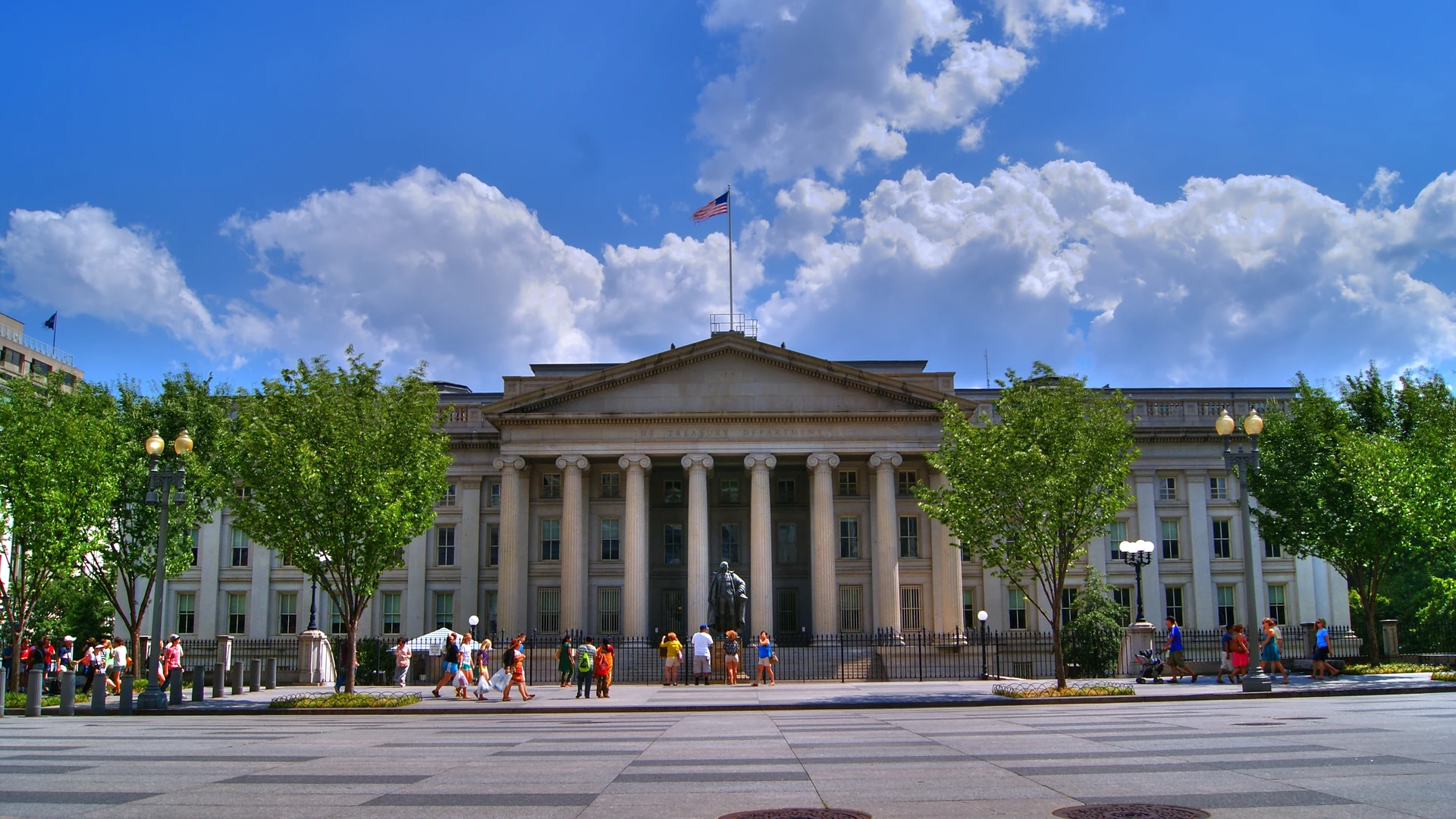
Photo: The United States Treasury Building in Washington, D.C., cropped. Erich Robert Joli Weber via Wikimedia Commons, CC BY-SA 3.0.
Sources and Further Reading
- Internal Revenue Service, “Treasury, IRS issue final rules to help hardworking Americans build a financially secure retirement,” IR-2026-141, November 17, 2026
- U.S. Department of the Treasury, “Treasury, IRS Issue Final Rules to Help Hardworking Americans Build a Financially Secure Retirement,” November 17, 2026
- Internal Revenue Service, “Automatic Enrollment Requirements Under Section 414A,” 91 FR 74090, November 18, 2026 (TD 10061)
- Federal Register official PDF, 91 FR 74090, November 18, 2026
- Vanguard, “How America Saves 2026”