

It finally happened. On Friday, November 20, 2026, the S&P 500 fell 3.7% to close at 6,910.39, and the Dow Jones Industrial Average dropped 949.73 points, or 1.93%, to 48,147.33. That left both indexes more than 10% below their record closes, which is the line Wall Street uses to call a “correction,” CNBC reported. The Nasdaq Composite lost 5.28% that day and is now down 2.7% for the year.
If you opened your 401(k) statement over the weekend, you probably felt it. So let’s slow down and look at what a correction is, how often one comes along, and what it should and shouldn’t change about your plan.
What a correction actually is
A correction is simply a drop of 10% or more from a recent high. It’s a label, not a forecast. The S&P 500’s high came on October 6, and the index had its last correction in March 2025, during the tariff fight, according to the Associated Press.
Last week was rough by any measure. The Dow fell 8% for the week, its worst since March 2020. The Nasdaq fell about 10%, and the S&P 500 fell 8.6%, its worst week since April 2025. CNBC’s rundown of the causes points to a few things piling up at once: investors cashing out of artificial intelligence stocks around Anthropic’s record IPO, Nvidia’s slide after a Reuters report that the SEC is looking at its accounting, the S&P 500 breaking below its 200-day moving average, and worries that the Federal Reserve may raise rates again. Fed Governor Christopher Waller said last week the Fed may need a half-point hike next month.
How often does this happen?
More often than most people think. Betashares chief economist David Bassanese looked at the S&P 500 from September 1954 through March 2025 using LSEG data. In his post-war history of corrections, he counted 24 declines of at least 10%, or about one every three years.
- 13 of those 24 stopped short of a 20% loss.
- Those corrections fell 13.5% on average and took about 4.3 months to hit bottom.
- The recovery back to the old high took about 3.1 months on average.
Now the honest part. The other 11, or 45%, kept falling and became bear markets, meaning drops of 20% or more. Bassanese found that the odds were much lower when the economy avoided a recession (26%) and much higher when a recession followed (77%). So nobody knows yet whether this one is a short dip or the start of something longer. Anyone who tells you they know is guessing.
As of early Monday, November 23, stock futures pointed to a bounce. S&P 500 futures were up 2.76% around 6 a.m. EST, CNBC reported. Futures aren’t a promise, though, and it’s a short week: markets close Thursday for Thanksgiving and at 1 p.m. on Friday.
What it means for your 401(k), depending on where you are
If retirement is 10 or more years away, a correction mostly means your next paycheck contributions buy shares at lower prices. The SEC’s investor education site, Investor.gov, puts it plainly in its guide to asset allocation: an investor with a longer time horizon “can wait out slow economic cycles and the inevitable ups and downs of our markets.”
If you’re within about five years of retiring, this is a good week to check your mix, not to sell everything. Money you’ll need soon shouldn’t be riding on the stock market’s mood. If a correction would force you to sell stocks to pay next year’s bills, your mix may be too aggressive for your timeline.
If you’re already retired and drawing income, the main risk is selling stocks while they’re down to cover living costs. One common approach is to keep a year or two of spending in cash or short-term savings, so you can leave stocks alone during a slide like this one.
I’ve been a long-term investor since I became a Primerica client in 1999, which means I’ve sat through the dot-com bust, 2008, and the 2020 crash. The urge to “do something” is strongest on the worst days, and it’s usually the worst time to act on it.
Five things worth doing this week instead of panic-selling
- Keep your contributions going. Stopping them now means buying less when prices are lower.
- Check your mix against your timeline. If you’re close to retirement and mostly in stocks, that’s a conversation worth having now.
- Rebalance on a schedule, not on a headline. Investor.gov notes that rebalancing “tends to work best when done on a relatively infrequent basis.”
- Make sure your emergency fund is real. Cash you can reach keeps a job loss or a car repair from turning into a forced sale.
- Look at your account less often. Checking daily during a slide rarely changes your plan, but it can wear on your nerves.
The Bottom Line
As of Monday morning, November 23, 2026, the S&P 500, the Dow, and the Nasdaq are all in correction territory, and nobody can say yet whether this ends as a dip or something deeper. History says corrections are a normal part of owning stocks. So ask yourself: if the market fell another 10% from here, would your plan still work? Would you need to sell anything to pay your bills? If the honest answer worries you, take an hour this week to review your mix, and keep reading DailyFinancialNews.com for calm, plain-English updates as this story develops.
One small favor: would you add DailyFinancialNews.com as a preferred source on Google? It only takes a few seconds, and it really helps.
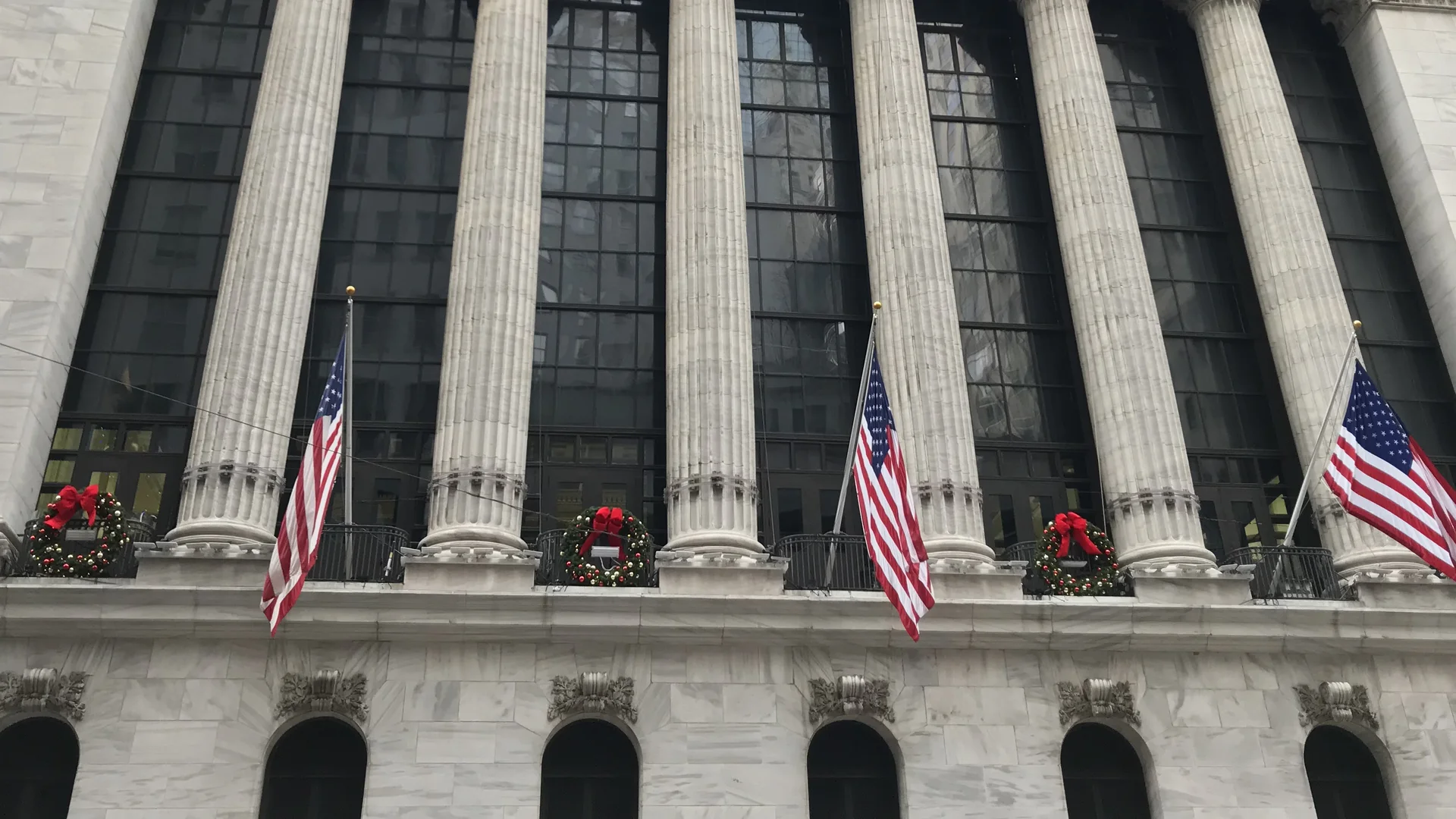
Photo: New York Stock Exchange facade with holiday wreaths, cropped. Donatingpictures via Wikimedia Commons, CC BY-SA 4.0.
Sources and Further Reading
- CNBC, “S&P 500 and Dow close in correction; Nasdaq erases 2026 gain as AI rout picks up steam,” November 20, 2026
- CNBC, “S&P 500 correction: What caused the market sell-off,” November 20, 2026
- Associated Press, “S&P 500 sinks 3.7% and Nasdaq composite goes negative for the year as tech sell-off worsens,” November 20, 2026
- CNBC, “Stock market today: Live updates,” November 23, 2026
- David Bassanese, Betashares, “A post-war history of stock market corrections” (data as of March 26, 2025)
- Investor.gov (U.S. Securities and Exchange Commission), “Beginners’ Guide to Asset Allocation, Diversification, and Rebalancing”