

Stocks jumped the day after the midterms, and your 401(k) balance probably looked better on Wednesday than it did on Monday. That’s nice, but one good day isn’t a plan. Here’s what actually happened, what it could mean for households, and what’s mostly noise, as of Nov. 5, 2026.
What happened
The Associated Press reported on Nov. 4 that Democrats won the House, giving them “unified control of Congress” along with the Senate. President Trump has said he’ll use his veto, so a split between the White House and Congress is the likely setup for the next two years. The new Congress is sworn in on Jan. 3, 2027, under the 20th Amendment.
Markets liked something about it. According to AP closing figures, on Nov. 4:
- The S&P 500 rose 119.70 points, or 1.6%, to 7,688.62.
- The Dow Jones Industrial Average gained 1,569.40 points, or 3%, to 53,356.12.
- The Nasdaq composite added 364.50 points, or 1.4%, to 25,736.51.
- The Russell 2000 of smaller companies rose 1.6% to 2,856.95.
AP put the S&P 500’s 2026 gain at 12.3% as of that close. Global News, carrying AP’s report, said Brent crude oil fell 8.7% to $94.62 a barrel, and the 10-year Treasury yield dropped to 4.88% from 4.95% late Tuesday.
Not everything went up. In the same report, hospital operator HCA rose 10.9%, and Dollar Tree gained 8.7%, while defense contractor Lockheed Martin fell 6.7% and Trump Media & Technology Group dropped 23.5%. That’s the market guessing at which policies are more or less likely to change.
Why one day tells you very little
Before the vote, Colin White of Veracan told Global News, “Markets hate uncertainty, and some of that uncertainty is going to get removed tonight.” That’s the clearest explanation for a relief rally. It’s not a forecast.
Brian Jacobsen of Annex Wealth Management put the longer view bluntly: “Earnings trump elections.” Over time, company profits, interest rates, and inflation tend to matter far more for your retirement account than which party holds the House.
A divided government also limits how much can change. A president can still act on trade, tariffs, foreign policy, and existing regulations without Congress, as Tai Hui of J.P. Morgan Asset Management noted in comments to The Guardian. ING’s Carsten Brzeski summed up the mood this way: “Trump is not now a lame duck, but an angry duck.”
What households should actually watch
Interest rates. The 10-year Treasury yield shapes mortgage rates and bond fund returns. AP noted that a Democratic Congress “could provide a check against more spending and cuts to taxes that would widen Washington’s deficit,” which helped yields ease. That can change quickly if inflation heats up. Watch the rate, not the headlines.
Gas and energy prices. Oil’s drop on Nov. 4 could ease pump prices if it lasts. Energy costs hit middle-income budgets fast, so this one shows up in your wallet before it shows up in your 401(k).
Health care costs. AP reported that health care stocks rallied because a Democratic-led Congress could try to reverse some of the cuts to federal health care and food assistance that Republicans approved over the summer. Whether that happens depends on what the president will sign. If you buy coverage through the ACA marketplace, compare plans carefully during open enrollment.
Fights over must-pass bills. A Democratic Congress and a Republican president will have to agree on government funding and the debt limit. Past standoffs have caused short bursts of market volatility. They’re worth knowing about, not worth panic selling over.
What not to do
Don’t move your retirement savings around based on an election. Trying to time the market around politics means you have to be right twice, once getting out and once getting back in. Most people aren’t.
If anything, a big up day is a good time to check your stock-and-bond mix. If stocks have run up enough that your portfolio is riskier than you planned, rebalancing back to your target is a calm, rules-based move. Keep an emergency fund in cash so you never have to sell investments in a bad week.
The Bottom Line
The midterms gave markets a relief rally and Washington a new balance of power. For most families, the same things matter: interest rates, energy and health care costs, and steady saving. Keep contributing, stay diversified, rebalance when you’re off target, and let earnings, not election nights, drive your long-term decisions.
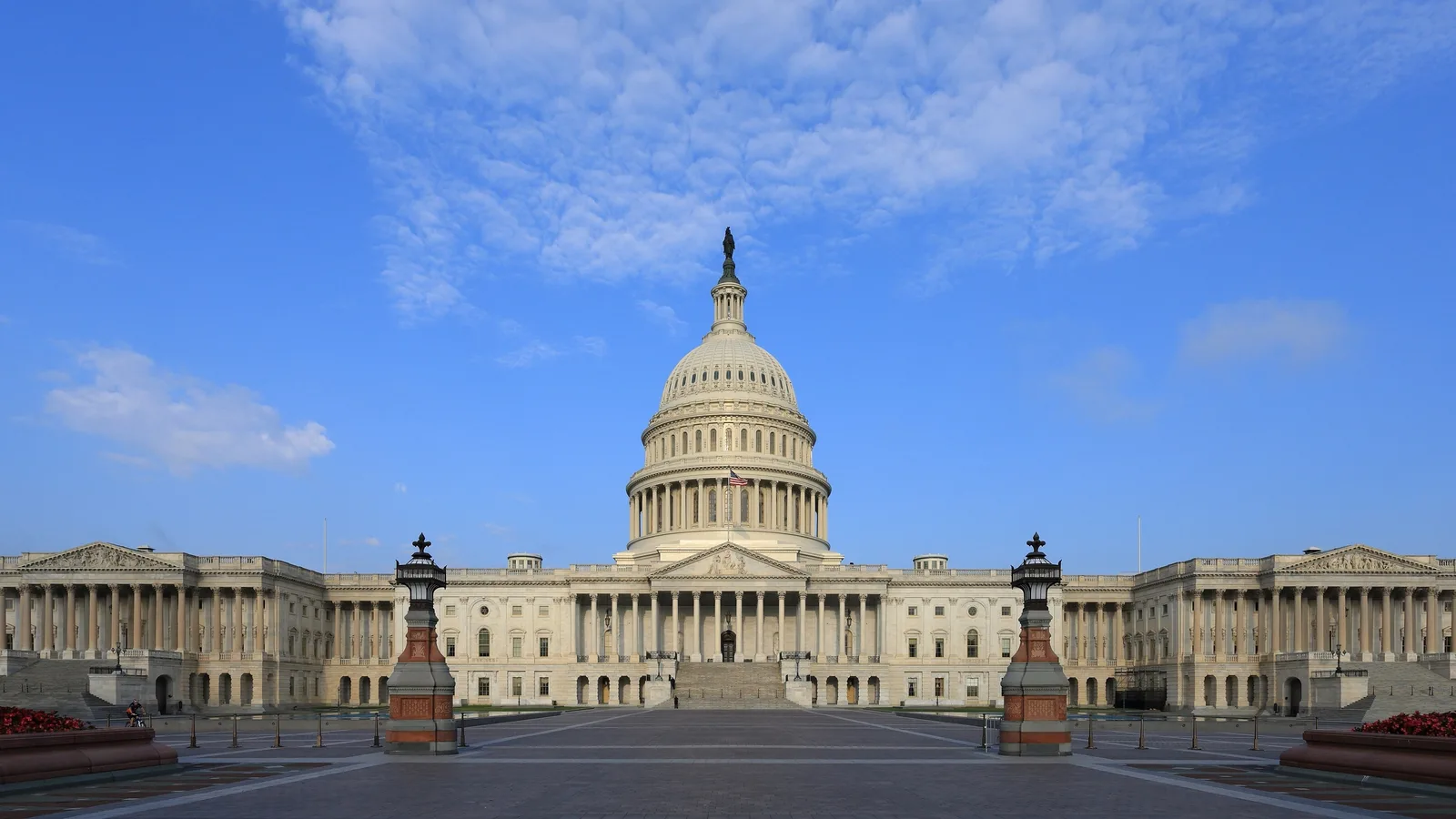
Photo: Martin Falbisoner via Wikimedia Commons, CC BY-SA 3.0.
Sources and Further Reading
- MPR News (AP): Democrats win the US House and take unified control of Congress (Nov. 4, 2026)
- Barchart (AP): How major US stock indexes fared Wednesday, 11/4/2026
- Global News (AP): Stock markets surging after U.S. midterm election as oil prices plummet (Nov. 4, 2026)
- Global News: How midterm results could affect financial markets and retirement savings (Nov. 3, 2026)
- The Guardian: US stocks rise, dollar slides as investors digest Democrats’ midterm victories (Nov. 4, 2026)
- Constitution Annotated: Twentieth Amendment