

Anthropic, the company behind the Claude AI models, priced the biggest IPO on record this week, measured by the money raised at pricing. It priced 980 million Class A shares at $83.00 on Wednesday, November 18, 2026, and began trading on the Nasdaq the next morning under the ticker ANT. That raised $81.3 billion, CNBC reported, topping the $75 billion SpaceX raised when it priced in June. SpaceX’s total later grew to $85.7 billion after its underwriters bought extra shares. The stock opened at $111.50 and closed Thursday at $97.17, up about 17 percent from the offering price.
If you have a 401(k), the natural question is whether this stock is about to land in your account. For most people, the honest answer is: later, a little at a time, and in a smaller dose than the headlines suggest.
The numbers that check out
Anthropic’s own announcement confirms the $83.00 price and the 980 million shares, of which 956,351,354 were new shares from the company, and 23,648,646 came from existing stockholders. The deal is expected to close today, November 20, and underwriters have a 30-day option to buy up to 147 million more shares. Multiply 980 million by $83 and you get about $81.3 billion, which matches the reported total.
CNBC put the company’s fully diluted market value at roughly $1.8 trillion at Thursday’s close, behind only Apple, Microsoft, Nvidia, Alphabet, Amazon, and SpaceX. The prospectus, as CNBC summarized it, showed $33.24 billion in revenue for the first nine months of 2026 and a $104 billion net loss over the same stretch, mostly from accounting changes tied to convertible notes and derivatives. Amazon owns 14.7 percent of Anthropic, and Google owns 13.7 percent after the offering.
That last detail matters more than it looks. If you already own a broad stock fund, you probably own Amazon and Alphabet, which means you already had an indirect stake in Anthropic before the opening bell.
When your index fund might actually buy it
Every index has its own rules for adding new stocks, so the timing is staggered. According to CNBC’s reporting with Morningstar and University of Florida researchers:
- The Morningstar U.S. Total Market Index adds the stock after a five-day waiting period, so funds tracking it should pick it up by the end of November.
- MSCI indexes add large IPOs after 10 trading days, pointing to early December.
- FTSE Russell said Anthropic will join its indexes, such as the Russell 3000, when the market opens December 14, because the usual window ran into Thanksgiving week.
- The Nasdaq-100 will add it after December 18, when Nasdaq finishes a scheduled review.
The S&P 500 is the big exception. S&P Dow Jones Indices’ rules say a new stock must trade for at least 12 months before it can be considered, with no fast track. The company also needs positive GAAP earnings in its most recent quarter and over the last four quarters combined. In June, S&P Dow Jones decided not to loosen those rules for giant companies. So if your 401(k) is built mostly on an S&P 500 fund, Anthropic won’t be added for at least a year, and only then if it qualifies.
Even where it does get added, the slice is small. Jay Ritter, director of The IPO Initiative at the University of Florida, estimated before trading began that Anthropic would be about 0.15 percent of the Morningstar total market index and about 0.8 percent of the Nasdaq-100. “Most [index funds] will only be picking up Anthropic in the neighborhood of 10-basis-point positions,” Morningstar’s Stephen Welch told CNBC. Ten basis points is one-tenth of 1 percent.
The Fed is already watching AI risk
On the same day Anthropic priced its shares, the Federal Reserve released the minutes of its October 27-28 meeting. In the section on financial stability, “almost all participants commented on risks associated with a scenario in which the returns on AI investment turned out to be disappointing to investors.” Most officials noted that AI-related debt had grown fast, much of it through “complex and opaque financing structures,” and a few said AI exposures were “becoming increasingly concentrated among a small number of firms.”
That doesn’t mean a crash is coming. It does mean the people who set interest rates are openly talking about concentration in AI stocks, and that’s worth knowing when one company’s debut dominates the news.
I’ve watched plenty of “this changes everything” headlines come and go. The retirement plans that hold up are usually the boring ones: steady contributions, broad funds, and enough time.
What to do this week
- Look up what your funds hold. Your plan’s website lists each fund’s top holdings. A total-market fund may add Anthropic within weeks. An S&P 500 fund won’t for at least a year.
- Check how concentrated you already are. Many index and target-date funds already lean heavily on a handful of giant tech companies. One more AI name doesn’t spread your risk.
- Be careful chasing the pop. As the BBC noted on debut day, a price jump is typical for hotly anticipated tech listings, and so is a fall in the following days and weeks. Anything you put into a single stock should be money you can afford to see swing hard.
- Keep your contributions on schedule. A record IPO is a good reason to understand your funds. It isn’t a reason to change a plan that’s working.
The Bottom Line
Anthropic’s $81.3 billion IPO is real history, but for most 401(k) savers it will arrive quietly, through index funds that add it on their own schedules and in small amounts. The S&P 500 won’t consider it for at least 12 months. Many investors already own a piece through Amazon and Alphabet. And the Fed has put AI concentration risk on the record. Know what you own, keep your plan steady, and let the excitement play out without you.
AI transparency: I used AI to condense this from my notes and draft and reviewed it before posting. Facts and quotes belong to the original source.
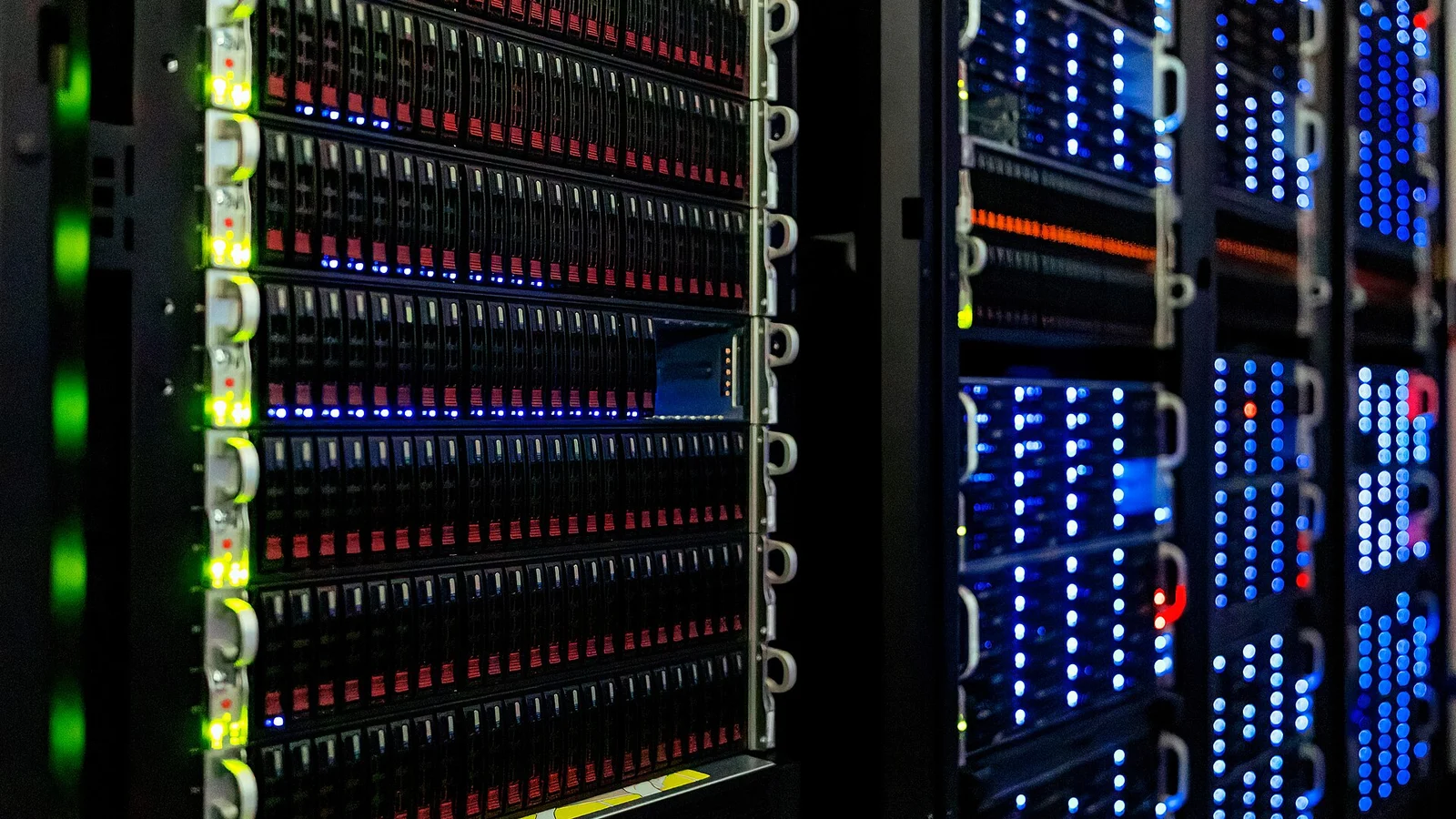
Photo: Server racks at the NOIRLab Headquarters computer room in Tucson, Arizona, cropped. NOIRLab / NSF / AURA / T. Slovinský via Wikimedia Commons, CC BY 4.0.
Sources and Further Reading
- Anthropic, “Anthropic prices initial public offering,” November 18, 2026
- Ashley Capoot and Leslie Picker, “Anthropic IPO raises over $81 billion in largest offering on record,” CNBC, updated November 19, 2026
- CNBC, “Anthropic IPO live updates: ANT stock price and Nasdaq debut,” updated November 19, 2026
- Greg Iacurci, “How to get Anthropic stock, without buying the IPO,” CNBC, November 18, 2026
- BBC News, “Anthropic IPO: shares close up 17% after record-breaking stock market debut,” November 19, 2026
- Federal Reserve, Minutes of the Federal Open Market Committee, October 27-28, 2026 (released November 18, 2026)
- S&P Dow Jones Indices, S&P U.S. Indices Methodology (IPO seasoning and financial viability rules)
- S&P Dow Jones Indices, “Consultation on Treatment of MegaCap Companies: Results,” June 4, 2026
- DailyFinancialNews.com, “Nvidia’s CEO Just Quit. What It Means for Your 401(k) and Index Funds,” November 13, 2026