

A past-due lunch account is a small bill with a long shadow. It can follow a family that earns just a little too much for free meals, or one that missed a form, or one that had a rough month. Districts cannot use federal meal funds to write it off. That is why a direct gift to a named school can matter more than a viral post.
In November 2019, the Richard Sherman Family Foundation paid more than $7,400 to clear the cafeteria debt at Cabrillo Middle School in Santa Clara, California, and, about a month earlier, nearly $23,000 to Tacoma Public Schools for students on free or reduced-price meals. In a letter to the school’s nutrition office, the foundation wrote, “The last thing any child should have to worry about is being able to afford eating breakfast and lunch at school.”
A widely shared social post has claimed that Hall of Fame receiver Jerry Rice and his wife, Latisha, quietly cleared more than $667,000 in lunch debt across 103 schools. I could not confirm that gift with a named school district, with Rice, or with a foundation tied to him. The same figures have been attached to many other public figures in look-alike posts, and a November 2025 fact check by Lead Stories found no evidence for that pattern of claims. The gifts below are ones I could verify with a named school or district and a contemporaneous news report.
Verified gifts, with names and places
That same holiday season, Chase Winovich, then a New England Patriots rookie, paid off the free and reduced-price lunch debt of 96 students in the West Jefferson Hills School District in Pennsylvania. Micah Hyde’s foundation presented a $1,485 check to pay off lunch debt for 167 children in Fostoria City Schools, his Ohio hometown district. UFC fighter Justin Gaethje wrote a $1,538 check that cleared first-semester lunch debt at two Denver schools, West Early College High School and Middle School. Principal Ana Mendoza told 9News the gift helped at least 25 students. He handed her the check and did not ask for photos.
In November 2022, Seattle Seahawks wide receiver Tyler Lockett and linebacker Bobby Wagner, then with the Los Angeles Rams, paid off all delinquent student lunch accounts in the Renton School District. District spokesperson Randy Matheson told The News Tribune the total covered a few dozen family accounts and was paid within a day. He did not disclose the amount, and said Wagner had done this for Renton at least twice before.
How a lunch balance becomes a family bill
School meal debt is an unpaid charge on a student’s meal account after breakfast or lunch is served. It often starts small: a forgotten reload, a lost job, or income just above the free-meal line. The School Nutrition Association found typical paid lunch prices of about $3.00 to $3.25 in the 2025-26 school year.
For 2026-27, a family of four with income at or below $42,900 qualifies for free meals, and one at or below $61,050 qualifies for reduced-price meals, according to the U.S. Department of Agriculture’s income guidelines (130% and 185% of poverty). Families usually have to apply each year, unless they are already certified through a program such as SNAP. USDA rules require schools to collect unpaid meal charges and prohibit them from using federal child nutrition funds to pay the debt off.
In its 2025-26 trends survey, the School Nutrition Association found that 92.2% of programs that do not offer meals free to all students reported unpaid meal debt, with a median balance of $6,000 among districts that reported it. The Education Data Initiative estimates national public-school meal debt at $271.61 million after the 2024-25 school year, or about $5.68 per child.
The Community Eligibility Provision lets high-poverty schools or districts serve breakfast and lunch at no cost to every enrolled student, without collecting household applications, if at least 25% of students are already certified for free meals without an application, often through SNAP or TANF. USDA lowered that threshold from 40% in 2023 and reimburses a share of meals at the free rate equal to that percentage times 1.6. Some states also fund free meals for all public-school students. If your local schools already serve meals at no charge, unpaid lunch debt may not be the problem to solve.
How to give so the money reaches the account
The verified athlete gifts share a simple method. Someone asked a named district what was owed, then paid that office directly. You can do a smaller version of the same thing. Call or visit your district’s Food and Nutrition Services page and ask about an angel fund or a donation for negative meal balances. Give through the district, not through a viral social post or an unfamiliar website that appeared in your feed. Ask that the gift be applied to negative student accounts, and ask for a receipt or written confirmation that the money was posted. If the district already serves free meals to all, ask what would actually help, whether that is breakfast outreach, summer meals, or another nutrition need.
Keep a part, then give from a firm foundation
George S. Clason’s The Richest Man in Babylon, first issued in 1926, is mostly a book about saving, not about charity. Its central line is plain: “A part of all you earn is yours to keep.” Arkad is told to pay himself first, at least a tenth, and to make that money work. Charity sits beside food as something you still leave room for out of the rest, not as the engine of wealth. Once rich, Arkad is “generous in his charities,” and his fortune still grows because he keeps the habit of saving.
My own view, shaped by that book and by years as a social worker, is a little different in emphasis. I do not give in order to get something back. I do think that when you first keep a part of what you earn, you build a foundation that lets you give generously when a real need shows up, like a lunch account at a local school. If a reward follows, that is a byproduct, not the motive. Mentoring people at no fee is one way I try to give back. Paying down a lunch account at a local school is another kind of quiet help, and it does not require a famous name.
The better-documented reward is how people feel, not a bigger paycheck. In a 2008 Science study, Elizabeth Dunn, Lara Aknin, and Michael Norton found that people randomly assigned to spend money on others were happier than those who spent the same amount on themselves. A 2017 Nature Communications study led by Soyoung Park found that people who pledged to spend money on others later reported larger increases in happiness, with reward-related brain activity during generous decisions tied to those changes. Ralph Waldo Emerson put the idea in older language in his 1841 essay “Compensation”: “Every act rewards itself.” He also wrote, “He is great who confers the most benefits,” and warned, “Beware of too much good staying in your hand.” The benefit, he said, should be paid away again.
The Bottom Line
School lunch debt is a real, documented bill, not a rumor from a social feed. A few athletes have shown how a direct gift to a named district can clear it. The useful lesson is the method: keep a part of what you earn, verify the need, give through the school or district, and ask for confirmation that the money reached the accounts. Give because the need is real. If a reward follows, let it be a byproduct.
AI transparency: I used AI to condense this from my notes and draft and reviewed it before posting. Facts and quotes belong to the original source.
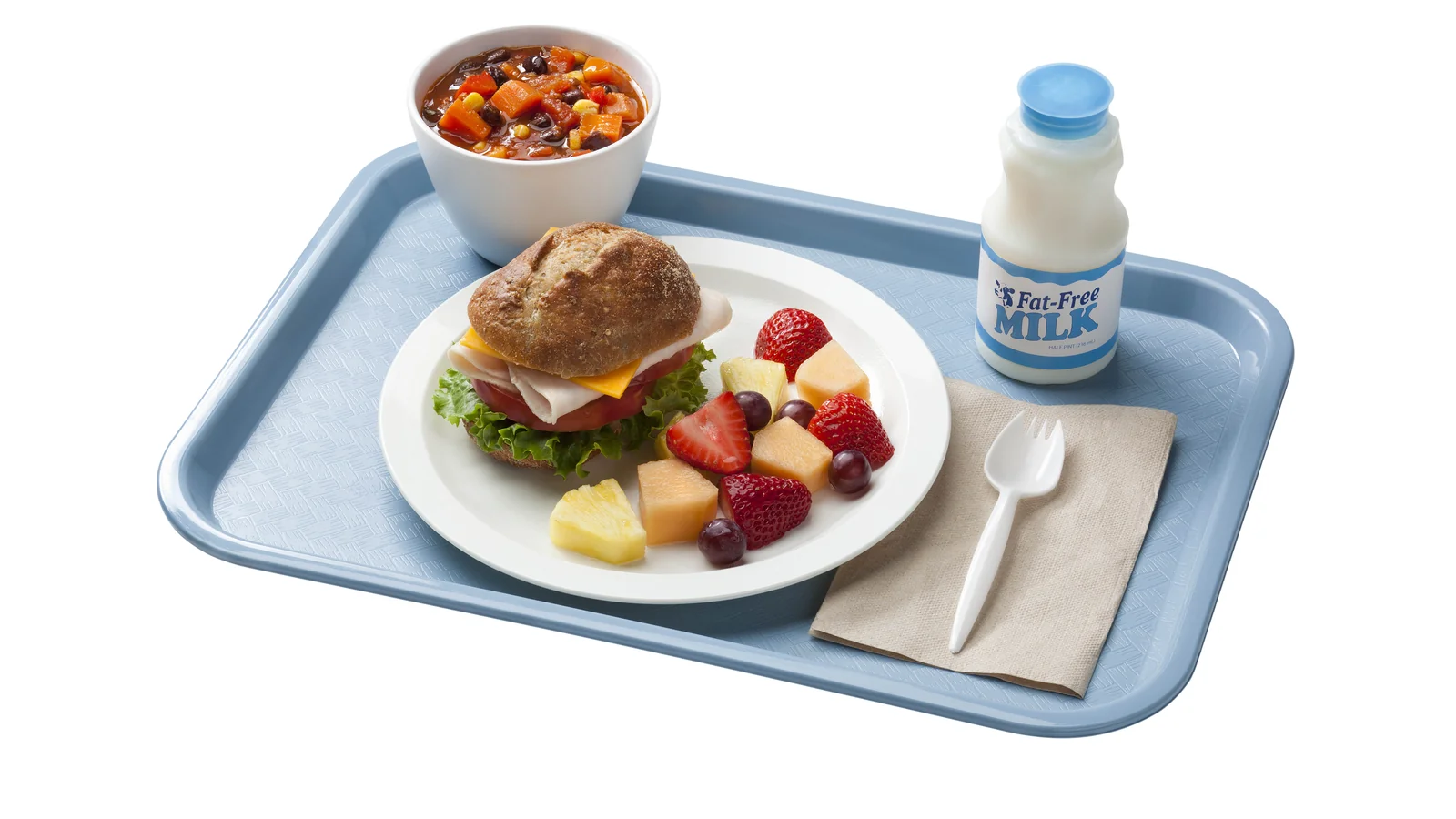
Photo: U.S. Department of Agriculture via Wikimedia Commons, public domain (U.S. government work).
Sources and Further Reading
- NBC Sports, “Richard Sherman’s foundation satisfies more than $27,000 in school cafeteria debt,” November 29, 2019
- San Francisco 49ers, “Richard Sherman: More than the Game of Football”
- ESPN, Mike Reiss, “Chase Winovich gives back to hometown by paying off school-lunch debt,” December 2019
- WTOL, Dan Cummins, “Ohio native, Buffalo Bills star Micah Hyde pays off Fostoria City Schools lunch debt,” December 21, 2019
- 9News, Janet Oravetz, “UFC fighter pays off lunch debts at 2 Denver schools,” December 17, 2019
- The News Tribune, Gregg Bell, “Renton School District thanks Tyler Lockett, Bobby Wagner for paying off kids’ lunch tabs,” December 7, 2022
- Lead Stories, Dean Miller, fact check of viral $667,000 / 103-schools lunch-debt posts, November 17, 2025
- School Nutrition Association, School Meal Statistics (including SY 2025-26 unpaid meal debt figures and 2026-27 income eligibility)
- U.S. Department of Agriculture, Child Nutrition Programs: Income Eligibility Guidelines (2026-2027), April 9, 2026
- Education Data Initiative, Melanie Hanson, “School Lunch Debt Statistics,” last updated September 3, 2026
- USDA, Community Eligibility Provision overview
- USDA, CEP Final Rule Summary (minimum identified student percentage lowered from 40% to 25%)
- USDA, Community Eligibility Provision Slider Tool (ISP x 1.6 reimbursement formula)
- George S. Clason, The Richest Man in Babylon (1926), Chapter 2, via Wikisource
- Elizabeth W. Dunn, Lara B. Aknin, and Michael I. Norton, “Spending Money on Others Promotes Happiness,” Science 319, no. 5870 (March 21, 2008): 1687-1688
- Soyoung Q. Park et al., “A neural link between generosity and happiness,” Nature Communications 8, 15964 (July 11, 2017)
- Ralph Waldo Emerson, “Compensation,” Essays: First Series (1841), via Project Gutenberg