

AMD just reported its best quarter ever, and its stock barely moved. The same week, the U.S. dollar slipped to a one-month low. Put those two stories together, and you get a useful reminder about how markets work: good news is often already in the price, and the bigger forces around it can matter just as much.
Here’s where things stand as of Nov. 5, 2026.
AMD’s numbers
On Nov. 3, AMD reported record third-quarter revenue of $13.4 billion, up 45% from a year earlier. On a standard accounting (GAAP) basis, net income was $2.4 billion, or $1.46 a share. On the adjusted (non-GAAP) basis the company prefers, earnings were $2.09 a share, with a 56% gross margin.
The engine is artificial intelligence. AMD’s Data Center segment, which includes its Instinct AI chips and EPYC server processors, brought in a record $8.5 billion, up 97%. The Client and Gaming segment fell 8% to $3.7 billion, dragged down by a 40% drop in gaming. Embedded chips rose 29% to $1.1 billion.
“We delivered a record quarter with revenue exceeding the high end of our guidance as Data Center segment sales nearly doubled year-over-year,” said CEO Lisa Su. Chief Financial Officer Jean Hu added that the fourth-quarter outlook “reflects accelerating revenue and earnings growth.”
That outlook is big. AMD expects fourth-quarter revenue of about $17 billion, plus or minus 3%. The company says the midpoint implies about 66% growth from a year ago and about 27% from the third quarter.
Why the stock shrugged
On Nov. 4, AP reported that AMD shares “slipped 0.3 per cent even though the chip giant reported a stronger profit for the latest quarter than analysts expected.” Nvidia fell 2% the same day, and AI cloud provider CoreWeave dropped 9.6%.
Part of that was politics. AP said investors saw Democratic wins in Texas “as possibly slowing the further build out of AI data centres,” and that AI stocks came into Election Day “already under pressure because of worries their prices had shot too high.” Chris Turner of ING told The Guardian that speculation over whether a new Democratic Congress “would slow AI capital expenditure plans briefly hit markets.”
The takeaway for regular investors is simple. A company can beat expectations and still not move much if investors already expected a lot. Chasing last quarter’s winner rarely works as well as it looks in hindsight.
The dollar changed direction
Earlier in the week, the U.S. economy looked steady. On Nov. 3, the Bureau of Labor Statistics said job openings were “little changed at 7.5 million” in September, with quits rising to 3.4 million and layoffs at 1.6 million. The Census Bureau reported that factory orders rose $12.2 billion, or 1.8%, to $677.2 billion in September, the third straight monthly increase.
Then the election shifted the mood. The Guardian reported that on Nov. 4 the dollar index, which measures the dollar against six major currencies, “slid to its lowest level in a month.” Investors moved into U.S. Treasuries, pushing the 10-year yield down to about 4.92% during the day, and gold rose 2.2% to more than $4,000 an ounce.
What a weaker dollar means for you
A softer dollar isn’t good or bad on its own. It cuts both ways:
- International funds can get a lift. When the dollar falls, foreign stock gains are worth more when converted back into dollars.
- Big U.S. exporters can benefit. Many large U.S. companies, including chipmakers, sell heavily overseas, and a cheaper dollar makes their products more competitive.
- Imports and travel cost more. Over time, a weaker dollar can push up prices on imported goods and make trips abroad more expensive.
This is a good reason to own a broadly diversified mix, including some international exposure, rather than betting on one currency, one sector, or one hot stock.
The Bottom Line
AMD’s quarter shows how much money is pouring into AI, and the muted stock reaction shows how much of that was already expected. The dollar’s slide reminds us that currencies move with politics and rates, often quickly. For most households, the answer isn’t to trade on either headline. Keep a diversified portfolio, avoid being overweight in a single stock or sector, and stick to your long-term plan.
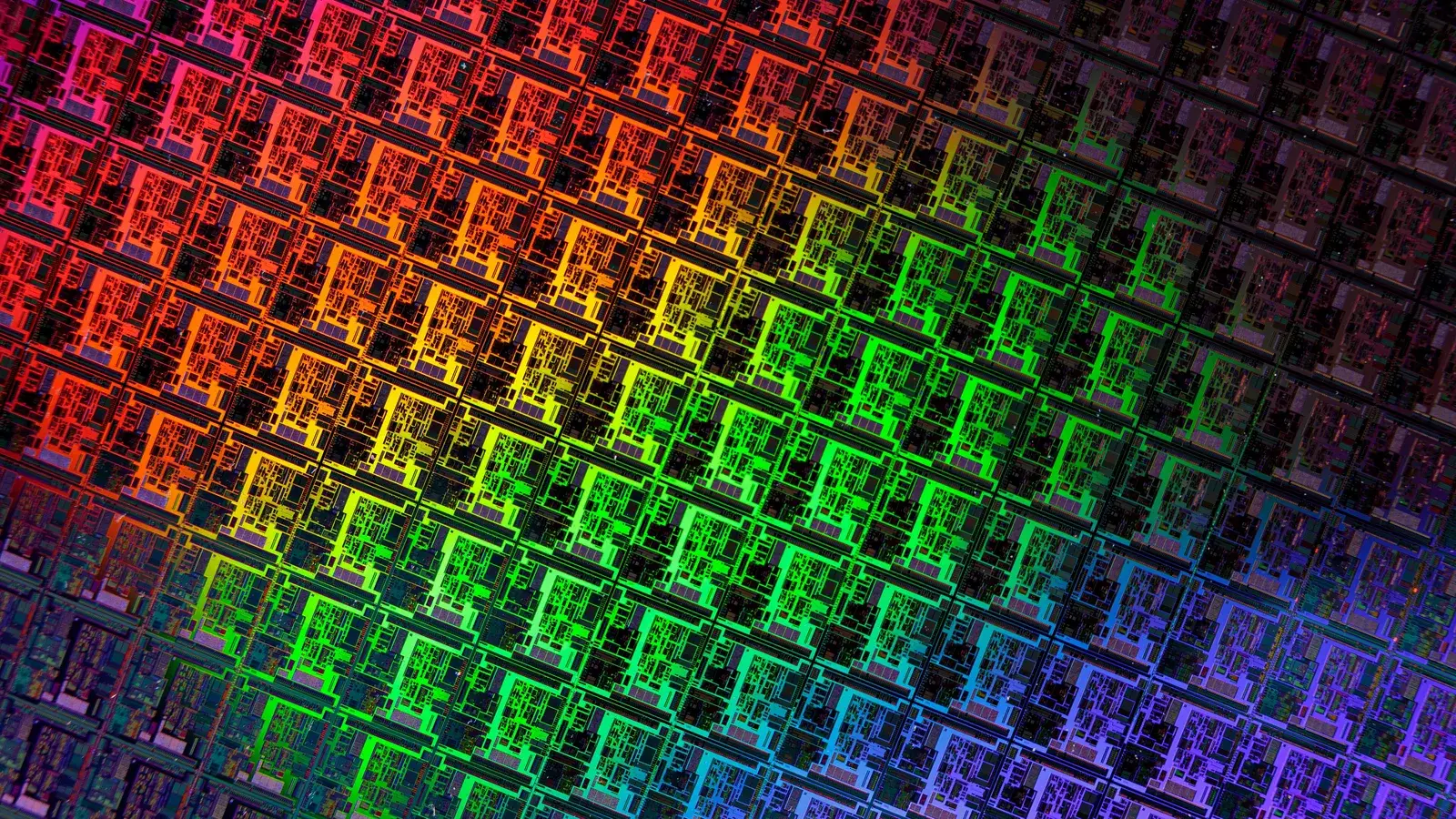
Photo: Rob Bulmahn via Wikimedia Commons, CC BY 2.0.
Sources and Further Reading
- AMD: AMD Reports Third Quarter 2026 Financial Results (Nov. 3, 2026)
- Global News (AP): Stock markets surging after U.S. midterm election as oil prices plummet (Nov. 4, 2026)
- The Guardian: US stocks rise, dollar slides as investors digest Democrats’ midterm victories (Nov. 4, 2026)
- U.S. Bureau of Labor Statistics: Job Openings and Labor Turnover Summary, September 2026
- U.S. Census Bureau: Manufacturers’ Shipments, Inventories, and Orders, September 2026