

Why the skills we use with families every day fit money conversations, and what the numbers really say about a side role with a company like Primerica.
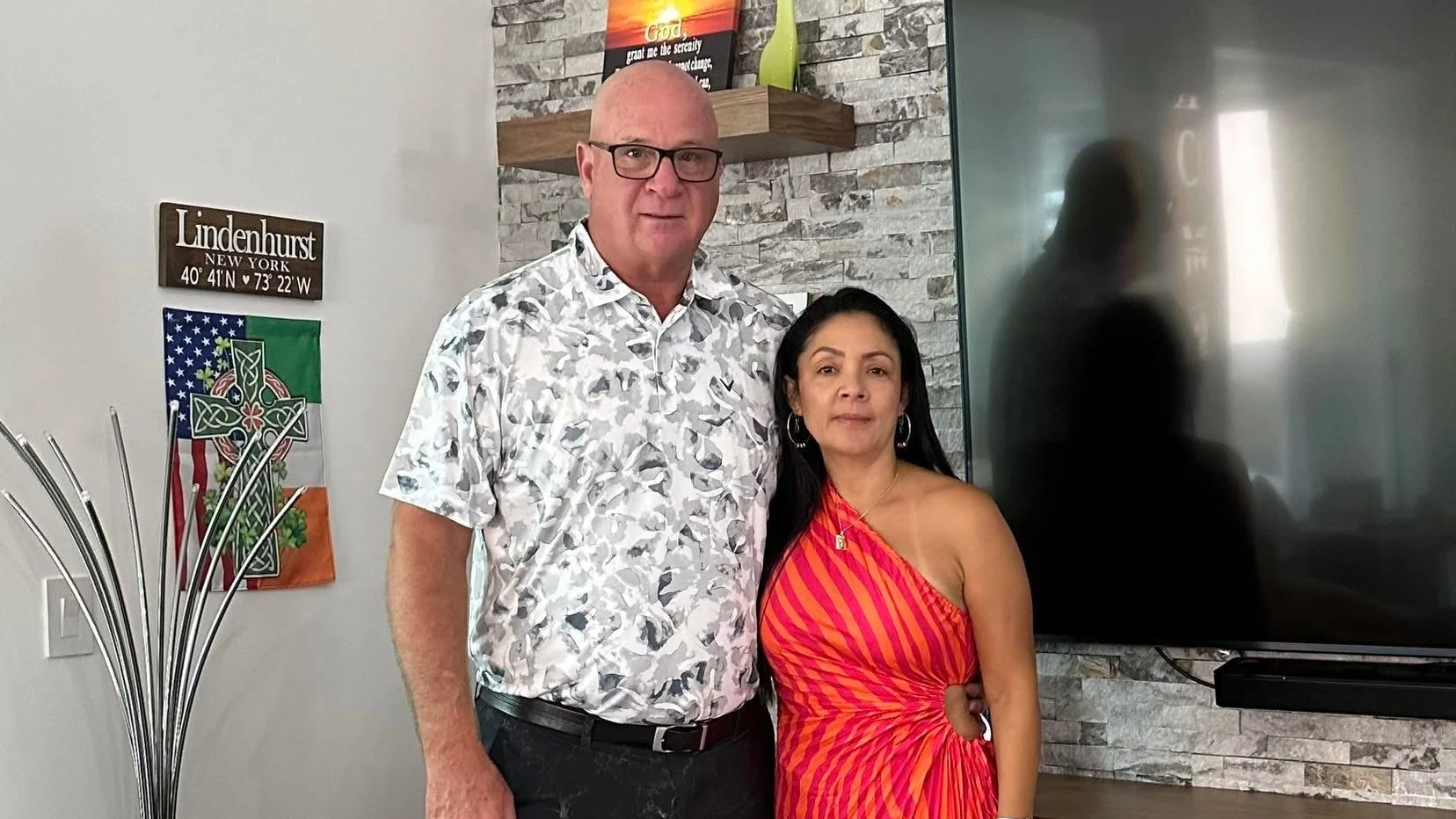
Disclosure first: I’ve been a client of Primerica Financial Services (PFS) since 1998, and I worked as a part-time, then briefly full-time, Primerica representative from 2000 to 2004. I have no current affiliation with the company, and I’m not paid to write this. I still use their products to protect my family.
I’ve worked in human services since 1983. In more than 40 years, I’ve sat with families in crisis, families in recovery, and families just trying to make it to the next paycheck. Ask a room of social workers what frustrates them most about the job, and pay comes up fast.
So here’s a question I keep coming back to. The people best at helping families plan often have the least financial breathing room themselves. What if those two problems could help solve each other?
The pay problem is real, and the data backs it up
The latest wage figures from the U.S. Bureau of Labor Statistics (BLS), current as of October 2026, are for May 2025. The median annual wage for social workers was $61,780. Child, family, and school social workers earned a median of $59,550, and social workers in the individual and family services industry earned $51,980. Social and human service assistants, a group that BLS says includes case work aides and family service assistants, earned a median of $45,930. Substance abuse, behavioral disorder, and mental health counselors earned $59,350, and BLS lists a master’s degree as the typical entry-level education for that job.
Employers feel it too. In the National Council of Nonprofits’ 2023 workforce survey, with more than 1,600 responses, 72.2% said salary competition affects their ability to recruit and keep staff. It was the most commonly cited factor. Human services providers made up almost a third (30.1%) of the nonprofits that reported it.
A 2023 University of Washington School of Social Work study, done for Seattle’s Human Services Department, found that human services workers in Washington state make at least 30% less than workers in other industries. For those employed by nonprofits, the gap was 37%.
What about second jobs? The evidence here is newer, and it’s striking. The Association of Social Work Boards’ 2024 Social Work Workforce Survey, analyzed in a July 2025 report, drew on 39,456 licensed social workers. About 31% of Clinical social workers said they held more than one job. So did about 27% of Advanced Generalist, 25% of Masters, and 14% of Bachelors social workers. For comparison, BLS data show that 5.4% of all employed people held more than one job in 2025 (an 11-month average, because October 2025 data weren’t collected during the federal shutdown).
One honest caveat. The report’s author, Dr. Joy J. Kim of the Rutgers School of Social Work, cautions that comparing the two surveys directly may not be advisable. She writes that the pattern “may indicate that their primary positions provide insufficient earnings or career opportunities” and says the reasons deserve more study. Still, when a quarter or more of licensed social workers are juggling jobs, that tells you something.
Most families are planning without a planner
Now look at American families overall.
The CFP Board counted 110,974 CFP® professionals in the United States as of October 1, 2026. The Census Bureau counted about 134.8 million U.S. households in 2025. That works out to roughly one CFP professional for every 1,200 households. And much of the advice world is aimed higher up the ladder. Cerulli Associates said in March 2026 that wealth management firms have traditionally preferred to start client relationships only after prospects reach asset minimums “ranging from $250,000 to more than $1 million.” To be fair, not every planner works that way. A CFP Board survey released in March 2024 found that 42% of CFP professionals surveyed don’t require a minimum. But for most of the families I’ve worked with over the years, a $250,000 minimum might as well be a locked door.
The FINRA Foundation’s National Financial Capability Study, published in July 2025 with data from a 2024 survey, is the latest edition as of October 2026. It found that only 46% of adults had set aside three months of emergency savings. Among households earning under $25,000, it was 22%. Only 39% had tried to figure out how much they need to save for retirement.
The Federal Reserve’s report on household well-being in 2025, published in May 2026, found that 63% of adults would cover a surprise $400 expense with cash or its equivalent. Twelve percent said they couldn’t pay it by any means.
Many of these are the middle-income households PFS says it serves: our neighbors, and sometimes our own coworkers.
We already have the skills
BLS lists this among a social worker’s core duties: assess clients’ “needs, situations, strengths, and support networks to determine their goals.” Add a budget and an insurance review, and that’s a financial-needs conversation.
Think about what social workers bring:
- Assessment. They’re trained to gather the whole picture before recommending anything.
- Trust. People tell them things they’ve never told anyone. Money is often one of those things.
- Family systems thinking. They know a debt problem is rarely just a debt problem. It touches the marriage, the kids, and sometimes the recovery.
- Goal planning. Short-term steps toward a long-term goal look a lot like a treatment plan.
- Meeting people where they are. No shame, no lectures. Just the next right step.
Money carries a lot of fear and shame. People who know how to hold that have a real advantage.
How the Primerica model works, according to its own filing
I’ll stick to what the company itself says in its annual report (Form 10-K) for 2025, filed with the SEC.
Primerica says it serves middle-income households, which it defines as $30,000 to $130,000 in annual income. Its representatives are independent contractors, not employees. The company says most begin part-time, “which enables them to hold jobs while exploring an entrepreneurial business opportunity.”
The team piece is real. New recruits can take part in “field training observations with experienced independent sales representatives.” Regional Vice Presidents (RVPs) support and monitor the representatives in their organizations, and in the United States they generally must hold a FINRA Series 26 principal license. Representatives use a proprietary Financial Needs Analysis tool. So a part-time person isn’t building a family’s short-term and long-term plan alone.
Licensing matters. To recommend and offer insurance, a representative must be licensed by their state, and Primerica says that takes about three months on average. To offer mutual funds and variable annuities, a U.S. representative must be registered with FINRA and hold the securities licenses each state requires. At the end of 2025, Primerica had 151,524 life-licensed representatives in the U.S. and Canada, and about 25,620 of them were licensed to distribute mutual funds.
The honest income picture
Primerica publishes an earnings statement. For 2025, it says it paid its life-licensed sales force members an average of $8,199, reported in local currency and not adjusted for exchange rates, so U.S. and Canadian dollars are mixed together. Representatives typically pay an initial fee of $99 for training and licensing, and they have ongoing personal expenses to run their business. The statement also says representatives “earn varying levels of income and the cash flow shown reflects an extraordinary level of success that is not typical of the sales force.”
Because representatives are independent contractors, the IRS generally treats this as self-employment. Business income and expenses go on Schedule C, and the profit you’re taxed on is income minus business expenses. Everyone’s situation is different, so talk with your CPA before counting on any write-off.
Those numbers deserve an honest read. It’s an average, not a median, and it’s gross pay before expenses. It only counts people who got licensed, and Primerica’s 10-K notes that many licensed representatives are only marginally active. In 2025, the company reported 358,316 new recruits and 48,722 newly life-licensed representatives. Results vary widely, and there are no shortcuts. For more on how Primerica’s recruiting model compares with the FTC’s pyramid-scheme test, see our article Is Primerica a Pyramid Scheme?
Here’s why I believe social workers and human services pros are a great fit for this work anyway. It runs on trust, and they build trust every day. They know how to listen first, ask good questions, and talk about hard things without turning people off. A family who sits down with them shouldn’t walk away feeling worked over by a pushy, slick salesperson. They should walk away feeling like they made a prudent decision based on their own needs. That’s the difference between being sold and being served.
So please hear me clearly. This isn’t a path to quick money, and I’m not promising anyone income. For a social worker who puts in steady part-time hours and gets licensed, it can add income while doing work that fits the mission. That’s the realistic picture, and for the right person, it’s a good one.
What I learned in 1998
Here’s my story. In 1998, I was making $75,000 a year, and I had a $50,000 whole life policy. That’s less than one year of my income to protect my family if something happened to me.
When Primerica showed me what that really meant, I was blown away. I was sold what I was told!
They showed me a simple idea: buy term and invest the difference. Get enough low-cost term coverage to protect your family, and put the money you’d spend on expensive cash-value premiums to work in savings and investments. Norman Dacey made a version of this argument back in 1963 in What’s Wrong with Your Life Insurance. Primerica’s own 10-K says the company believes term life insurance “is generally the best option” for middle-income clients.
I’ve been a client ever since, and I still use their products to protect my family.
A note from DFN founder Dan Callahan: I worked part time with Primerica Financial Services (PFS) while I was a social worker, and in 2001 I earned the company’s $50,000 watch, which it awarded to representatives who earned $50,000 in personal income. That was far from typical: Primerica says it paid its life-licensed sales force an average of $8,199 in 2025, according to its Important Earnings Statement. I went full time for a short stretch, and after the September 11, 2001, attacks I slowly decided to leave the company for personal reasons. I’ve been out of the company for well over 20 years and have no current affiliation with Primerica. But I did use it to supplement my income, and I loved every minute of it.
Keep your hats separate
If you’re a social worker thinking about this, one rule comes first. Never market financial products to your clients. Not current clients, and not former ones.
The NASW Code of Ethics is clear. Standard 1.06(b) says social workers “should not take unfair advantage of any professional relationship or exploit others to further their personal, religious, political, or business interests.” Standard 1.06(c) warns against dual or multiple relationships with clients or former clients “in which there is a risk of exploitation or potential harm to the client.” And Standard 1.16(c) prohibits giving or receiving payment for a referral when the referring social worker provides no professional service.
In practice, that means:
- Check your employer’s outside employment policy before you start.
- Never use agency contacts, client lists, or case information.
- Keep the two roles on separate time, phones, and email.
- If a client asks about money, refer them to neutral resources, not to yourself.
Primerica’s 10-K says representatives typically start by serving their friends, family members, and personal acquaintances. Set your boundaries before the first appointment, not after.
The Bottom Line
Social workers already know how to sit with a family, see the whole picture, and build a plan one step at a time. Millions of families have never had anyone do that with their money. Many of us could use the extra income. Done honestly and ethically, with the right licenses and team behind you, those needs can meet in the middle.
If you work in human services, what’s the one money question families ask you that you wish you had a better answer for?
Sources and Further Reading
- U.S. Bureau of Labor Statistics, Occupational Outlook Handbook: Social Workers (May 2025 wage data)
- U.S. Bureau of Labor Statistics, Occupational Outlook Handbook: Social and Human Service Assistants (May 2025 wage data)
- U.S. Bureau of Labor Statistics, Current Population Survey Table 36: Multiple Jobholders by Selected Characteristics (2025)
- National Council of Nonprofits, 2023 Nonprofit Workforce Survey Results
- University of Washington School of Social Work, “School of Social Work study confirms human services workers are underpaid” (2023)
- Association of Social Work Boards, The Licensed Social Work Workforce: Analyses of the 2024 Social Work Workforce Survey, by Joy J. Kim (July 2025)
- CFP Board, CFP® Professional Demographics (as of Oct. 1, 2026)
- U.S. Census Bureau, Total Households (TTLHH), via FRED, Federal Reserve Bank of St. Louis (2025)
- Cerulli Associates, “Mass-Affluent Households Represent a $25 Trillion Market Opportunity” (March 25, 2026)
- CFP Board, “CFP Board Survey: Americans Want Retirement Investment Advice to Be in Their Best Interest” (March 2024)
- FINRA Investor Education Foundation, Financial Capability in the United States, Sixth Edition (July 2025)
- Federal Reserve Board, Economic Well-Being of U.S. Households in 2025 (May 2026)
- Primerica, Inc., Form 10-K for the fiscal year ended Dec. 31, 2025 (SEC)
- Primerica, Important Earnings Statement (2025)
- Internal Revenue Service, Self-Employed Individuals Tax Center
- National Association of Social Workers, Code of Ethics: Social Workers’ Ethical Responsibilities to Clients
- Norman F. Dacey, What’s Wrong with Your Life Insurance (Crowell-Collier Press, 1963), Open Library record