

Federal Reserve Chair Kevin Warsh used his first visit to a Reserve Bank as chairman to talk about something bigger than the next rate decision: whether artificial intelligence, which he called “super intelligence,” could lift the economy’s long-run growth rate. Speaking on November 16, 2026, at a Fed conference on productivity and jobs in San Francisco, he said that if the technology speeds up the creation of new ideas, “growth could be sustained at a level substantially higher than the long-run average.”
That line is already being read as a bet on an AI boom. It was one of several paths he described, and he was careful not to call it a forecast. “We’re certainly not here to make predictions,” Warsh said. “We can’t know the future and ought not to pretend otherwise.” The Fed’s role, he said, is “neither advocacy nor opposition,” but to recognize that widespread adoption of the technology “will have significant impact on the economy, with important implications for monetary policy down the road.”
As of November 18, 2026, rates haven’t moved on the speech. At its October 27-28 meeting, the Federal Open Market Committee held the federal funds rate at a target range of 3-3/4 to 4 percent on a 10-2 vote, with Lisa D. Cook and Beth M. Hammack preferring a quarter-point increase. The next meeting is December 8-9.
What Warsh actually said
The full remarks are worth reading in his own words. Warsh argued that ideas drive long-run growth and that breakthrough ideas have been harder to find. Productivity growth, he said, “has fluctuated, and in recent quarters, it’s been reasonably strong. But it hasn’t yet broken out definitively and structurally to the upside.” What could set this technology apart is that it “could supercharge idea generation.”
He then walked through three “illustrative scenarios, not forecasts” that Fed Board staff have begun to model:
- Gains are shared broadly, real GDP growth stays above its long-run average, and the country stays close to full employment.
- Growth still rises, but automation displaces some jobs and pushes unemployment above full-employment levels.
- The technology disappoints. After “significant capital investment and stock market gains, expected returns could turn down and equity valuations could fall, leading to an economic slowdown and a more notable rise in unemployment.” The economy would recover in time, he said, “but without the productivity gains.”
His prepared text doesn’t discuss inflation, which the Associated Press pointed out in its coverage. That matters, because the Fed’s October statement said plainly, “Inflation remains elevated.”
What it could mean for rates, savers, and borrowers
If productivity rises for real and lasts, the economy can grow faster with less pressure on prices, which could give the Fed more room over time. If the boom costs jobs, or a drop in stock values slows the economy, the rate path could look very different. Warsh didn’t make a rate call in this speech, so anyone saying it locks in a hike or a hold in December is reading past the text.
For households, today’s numbers matter more than a growth theory. The 30-year fixed mortgage averaged 7.11% as of November 12, 2026, according to Freddie Mac, down from 7.18% the week before but up from 6.24% a year earlier. The FDIC’s national averages published November 16 were 0.39% for savings accounts and 1.81% for 12-month CDs. Those are averages, not the best yields available, and they show how little a basic savings account may pay while borrowing stays expensive.
A few practical moves:
- Borrowers: If you carry a variable-rate card or an adjustable loan, watch the December decision itself, not the speeches. We covered what a hike would mean in Rate Hikes Are Back on the Table.
- Savers: If your emergency fund earns close to the national average, compare it with insured high-yield savings or CD rates. The gap can be real money.
- Investors: Warsh listed a stock reversal as one path the Fed is studying. If your 401(k) leans heavily on a few AI-linked names, recheck that mix. See Is AI a Bubble? for how to think about that exposure.
I’ve watched plenty of “this changes everything” headlines come and go. The plan that holds up is usually the boring one: know what you owe, know what your cash earns, and don’t let one speech decide either.
The Bottom Line
Chair Warsh said AI could help sustain growth “substantially higher than the long-run average,” and he also described paths that include job losses or a bust after a market run-up. As of November 18, 2026, the Fed’s rate range is still 3-3/4 to 4 percent, with the next decision due December 8-9. Treat the speech as a map of risks, not a promise about your mortgage, savings, or 401(k).
AI transparency: I used AI to condense this from my notes and draft and reviewed it before posting. Facts and quotes belong to the original source.
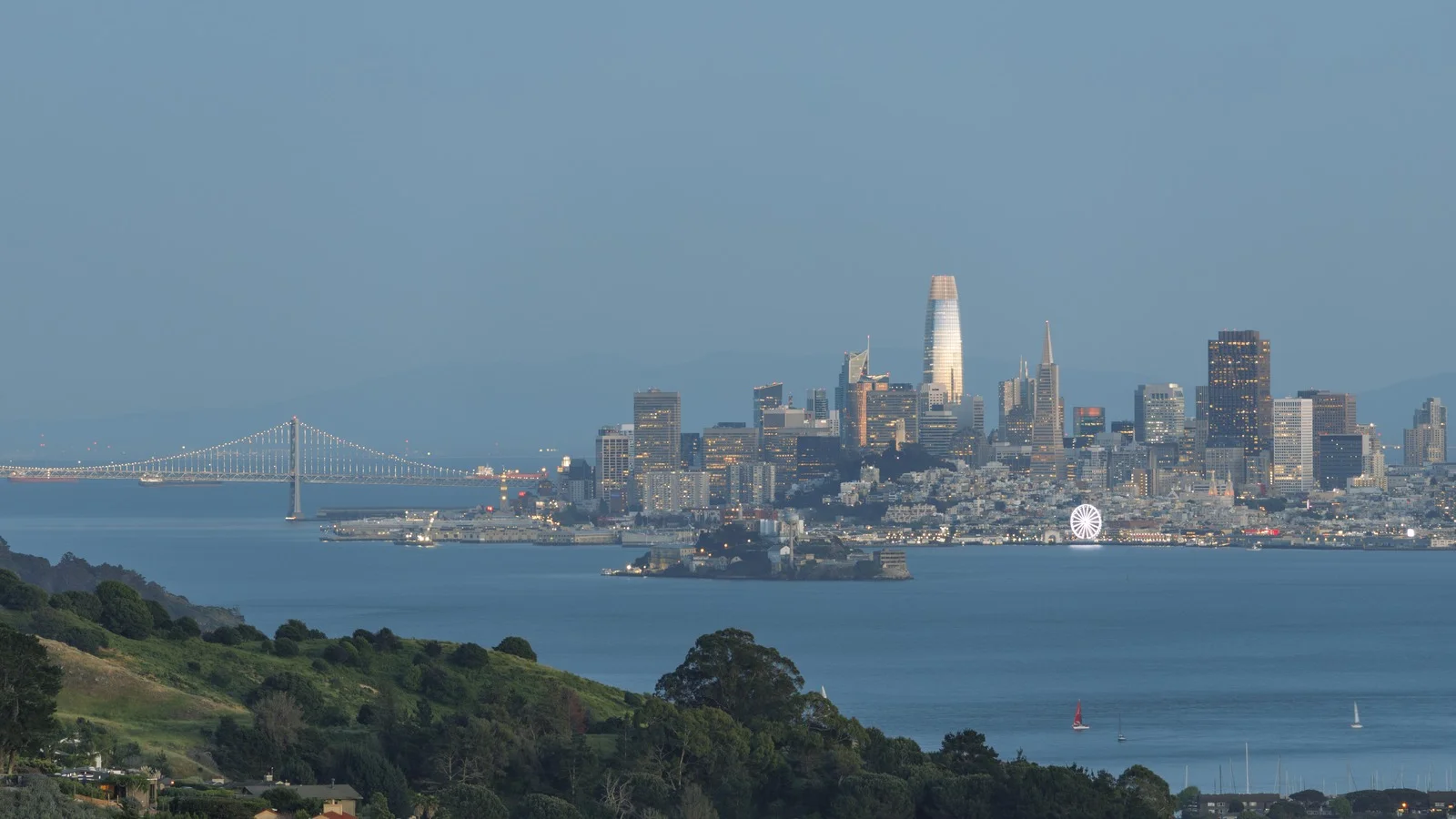
Photo: San Francisco from the Tiburon peninsula at dusk, cropped. E. Bailey via Wikimedia Commons, CC BY-SA 4.0.
Sources and Further Reading
- Kevin Warsh, “Opening remarks at the Federal Reserve’s Productivity and Jobs Task Force Conference,” November 16, 2026
- Federal Reserve, “Federal Reserve issues FOMC statement,” October 28, 2026
- Federal Reserve, FOMC calendars and the December 8-9, 2026, meeting
- Christopher Rugaber, “Fed Chairman Warsh grapples with AI’s potential economic impact, steers clear of its inflation risk,” Associated Press, November 16, 2026
- Freddie Mac, Primary Mortgage Market Survey, 30-year fixed rate as of November 12, 2026
- FDIC, National Deposit Rates as of November 16, 2026
- DailyFinancialNews.com, “Rate Hikes Are Back on the Table. What That Means for Your Mortgage, Card, and Savings,” November 16, 2026
- DailyFinancialNews.com, “Is AI a Bubble? What Apollo’s ‘Zero Payoff’ Warning Means for Your Portfolio,” October 27, 2026