

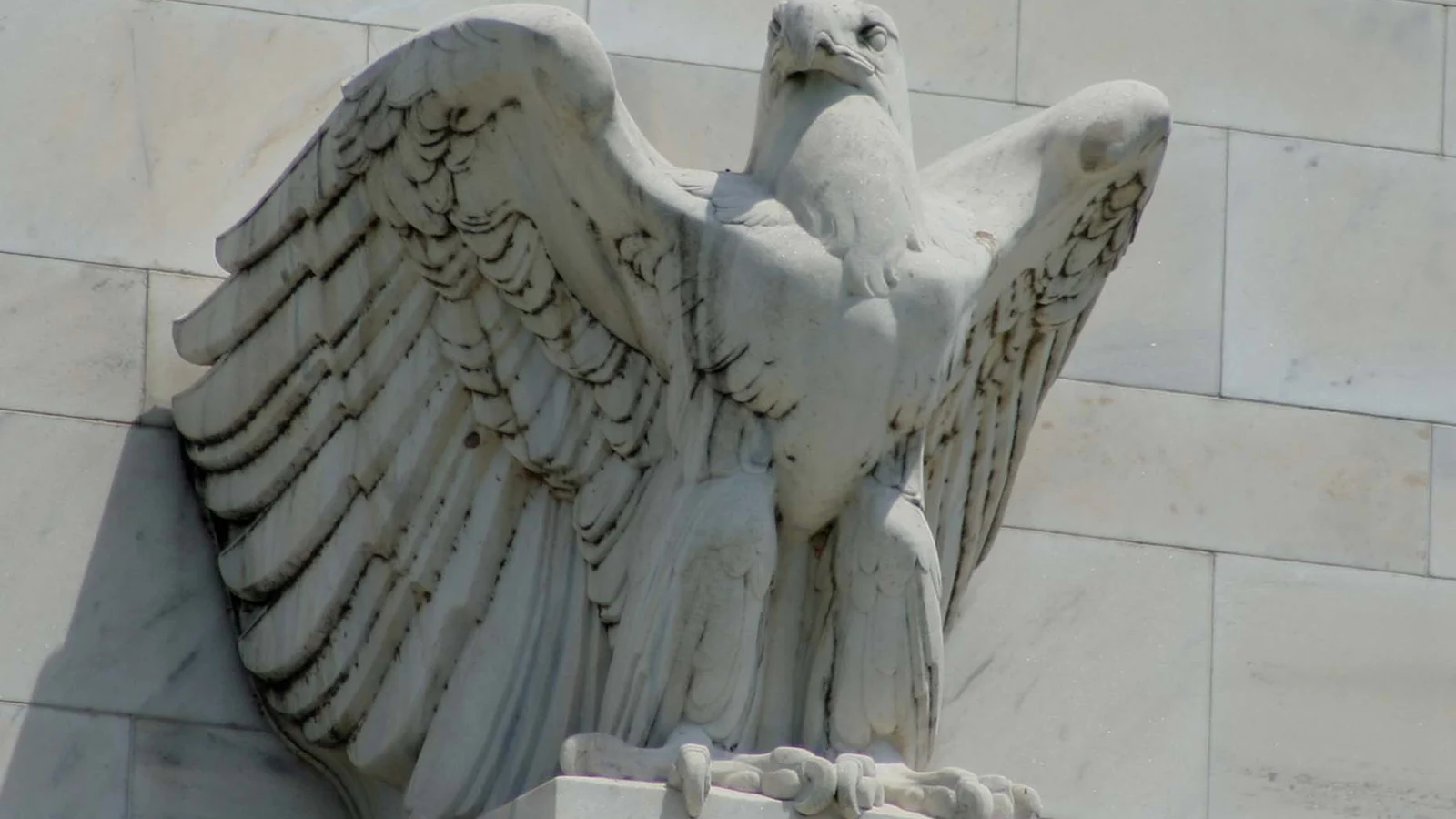
Photo: dbking / Wikimedia Commons, CC BY 2.0.
For more than four decades, the Federal Reserve has met eight times a year to decide where interest rates go. Starting next fall, that changes. At his press conference on Oct. 28, 2026, Fed Chairman Kevin Warsh said the central bank will set aside some of those eight meetings for long-range strategy talks, with no rate decision on the table.
If you have a mortgage, a home purchase in the works, or money sitting in savings, you’re probably wondering whether this matters to you. The short answer: a little, and probably less than the headlines suggest. Here’s what was actually announced and what it means for your household.
What the Fed announced
“We have decided on a change in our FOMC schedule, starting next fall,” Warsh told reporters, according to the Fed’s official transcript. The Federal Open Market Committee, or FOMC, is the group that sets the Fed’s benchmark rate.
The number of meetings isn’t going down. “We believe eight meetings per year is the right number for the FOMC,” Warsh said. What’s changing is what happens at them. “But in 2027, one meeting will focus exclusively on broad monetary policy strategy, with neither a vote on the federal funds rate nor a policy statement anticipated.” He added: “And I expect that in 2028, we’ll have two meetings dedicated to discussions of strategy, and six for setting policy.”
Do the math and you get seven rate-setting meetings in 2027 and six in 2028, down from the eight the FOMC has held each year since 1981, according to NBC News. The Fed’s 2027 calendar, updated Oct. 28, still lists eight meetings. As of Oct. 30, the Fed hasn’t said which one will become the strategy session. Omair Sharif of Inflation Insights told clients he expects it to be the October 2027 meeting, Reuters reported, but that is a forecaster’s guess, not a Fed decision.
At the same meeting, the committee voted 10 to 2 to keep the federal funds rate at 3.75% to 4%, according to its policy statement. Governor Lisa D. Cook and Cleveland Fed President Beth M. Hammack dissented. Both preferred to raise the rate by a quarter point.
Why Warsh says the change matters
Warsh, who became chairman about five months ago, framed the schedule as a real policy choice. “I believe the setting of the meeting schedule and agenda is more than some administrative detail,” he said. He also said, “Getting policy right involves assessing near-term developments at timely, regular, and information-rich intervals.”
One thing still isn’t settled. Asked whether the public would learn what’s discussed at the strategy meetings, Warsh said, “It’s not obvious yet. There’s more news to come on that.”
Can the Fed still move rates in an emergency?
Yes. The schedule sets the regular meetings, but the Fed isn’t locked into them. On March 3, 2020, as COVID-19 spread, the FOMC cut rates by half a point between scheduled meetings. Twelve days later, on a Sunday, it cut again. Reuters noted in its coverage that the Fed keeps the ability to change policy outside of FOMC meetings, as it did in early 2020.
What it means for your mortgage
Mortgage rates don’t move in lockstep with the Fed’s rate. They follow longer-term borrowing costs, which react to inflation, the economy, and what investors think the Fed will do over the next few years. As of Oct. 29, 2026, the average 30-year fixed rate was 7.24%, down from 7.32% a week earlier and up from 6.17% a year ago, according to Freddie Mac’s weekly survey. The 15-year averaged 6.60%.
Fewer rate decisions could mean each one carries more weight, and markets may swing more around those dates. For a homebuyer, the practical steps stay the same:
- Don’t try to time the Fed. Mortgage rates often move before and after a meeting based on expectations, not on the decision itself.
- Get your rate lock terms in writing. Ask your lender how long the lock lasts and what an extension costs if closing slips.
- If you have an adjustable-rate mortgage or a HELOC, check when your rate resets and which index it follows. Those products tend to track short-term rates more closely.
What it means for your savings
Savers have a bigger reason to pay attention, though not because of the schedule. Most bank savings accounts pay very little. As of the FDIC’s October 2026 national rates, the average savings account paid 0.38%, the average money market account 0.63%, and the average 12-month CD 1.76%. With the Fed’s benchmark at 3.75% to 4%, a lot of families are leaving money on the table.
Fewer rate-setting meetings won’t fix that. Shopping around will. Compare high-yield savings accounts, CDs, and Treasury bills from FDIC-insured banks or the government, and keep your emergency fund somewhere you can reach it quickly.
The Bottom Line
The Fed isn’t meeting less. It’s spending some of its eight meetings on strategy instead of rate votes, starting with one in 2027 and likely two in 2028. That’s a big change in how the central bank works, but for most households the money moves are the same as last month: lock mortgage terms carefully, know how your adjustable debts reset, and don’t let your savings sit at 0.38% when better rates are easy to find.
Sources and Further Reading
- Federal Reserve, Transcript of Chairman Warsh’s Press Conference (Oct. 28, 2026)
- Federal Reserve, FOMC Statement (Oct. 28, 2026)
- Federal Reserve, Meeting Calendars and Information
- Federal Reserve, FOMC Statement (March 3, 2020)
- Federal Reserve, FOMC Statement (March 15, 2020)
- Freddie Mac, Primary Mortgage Market Survey (Oct. 29, 2026)
- FDIC, National Rates and Rate Caps (October 2026)
- NBC News, “Fed plans to eliminate some rate-setting meetings, chairman says” (Oct. 28, 2026)
- Reuters via Investing.com, “Fed’s Warsh announces changes in how future FOMC meetings will go” (Oct. 28, 2026)
- CNBC, Fed meeting live updates (Oct. 28, 2026)
- Photo: dbking, “Eagle statue – Eccles Building,” Wikimedia Commons, CC BY 2.0