

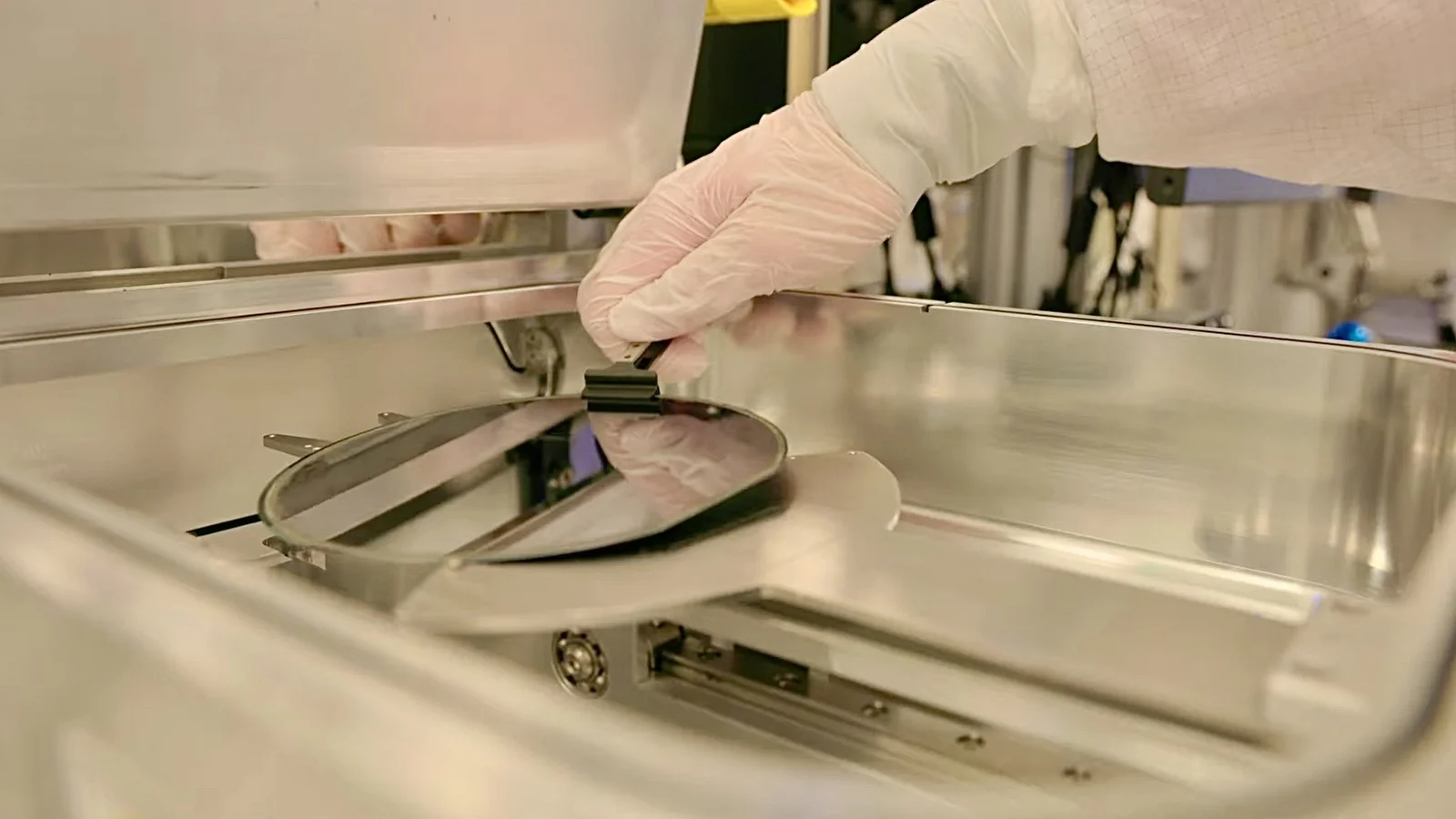
Photo: Purdue Engineering (YouTube) / Wikimedia Commons, CC BY 4.0.
Oct. 29, 2026, was one of those days when a lot of economic news landed at once. The government’s first estimate of third-quarter growth came out in the morning. So did September income and spending numbers. Then Amazon and Intel reported earnings after the market closed.
Taken together, they tell a story that’s a little more complicated than “the economy is booming.” Business is spending heavily, especially on artificial intelligence. Households are still spending too, but in September their paychecks didn’t keep up with prices. Here’s what each report said, and what it means for your budget.
The economy grew fast in the summer
Real gross domestic product grew at a 3.4% annual rate in the third quarter, up from 2.2% in the second quarter, according to the Bureau of Economic Analysis. BEA credited increases in investment, consumer spending, and government spending, partly offset by a drop in exports. Imports, which count against GDP, went up.
A measure economists watch closely, real final sales to private domestic purchasers, rose 4.9%, up from 4.6%. That strips out swings in trade, inventories, and government spending and shows how much businesses and households are buying themselves.
Inflation in the quarter cooled on paper. The PCE price index rose at a 2.1% annual rate, down from 5.0% in the second quarter. Excluding food and energy, it rose 2.5%, down from 3.3%. Keep in mind this is the first of three estimates. BEA’s next update is scheduled for Nov. 25, 2026.
September was tougher on household budgets
The monthly personal income and outlays report paints a less rosy picture. In September, personal income rose 0.2%, and disposable income, what’s left after taxes, also rose 0.2%. But prices rose 0.5% for the month, so real disposable income fell 0.3%.
People kept spending anyway. Consumer spending rose 0.5% in dollars, but after inflation it was essentially flat. The personal saving rate was 3.8%.
The year-over-year inflation numbers are the ones to watch. As of September, the PCE price index was up 3.6% from a year earlier, and 3.1% excluding food and energy. If your raise this year was 3%, you’ve probably lost a little ground.
Amazon: strong quarter, enormous spending
Amazon’s third-quarter release showed net sales up 12% to $201.9 billion, from $180.2 billion a year earlier. The company noted that Prime Day moved into the second quarter this year, and that without the shift, growth would have been about 400 basis points (4 percentage points) higher.
Amazon Web Services, its cloud business, grew 39% to $46.0 billion. “Our AWS investment in functionality and infrastructure is working,” said CEO Andy Jassy. Operating income was $28.1 billion. Net income dipped to $20.7 billion, or $1.89 a share, from $21.2 billion, which Amazon said was mainly because last year included $9.5 billion in pre-tax investment gains.
For the holiday quarter, Amazon expects sales of $240.0 billion to $247.0 billion and operating income of $28.5 billion to $33.5 billion. It still expects about $220 billion in capital spending for 2026.
Two items matter for workers. Amazon said it plans to hire more than 300,000 people across its U.S. operations for the holidays, and it’s raising minimum starting pay for U.S. full-time operations employees to $20 an hour.
Intel: data centers up, PCs down
Intel’s results showed the same split. Revenue rose 21% to $16.5 billion. Its data center and AI unit jumped 78% to $7.3 billion, while its PC chip unit fell 5% to $8.1 billion.
CEO Lip-Bu Tan said, “Despite near-term headwinds across the PC industry, demand for our CPUs remains robust.” CFO David Zinsner was more blunt about the outlook: “we see the PC slowdown continuing at least through the first half of next year.” Intel guided fourth-quarter revenue to $15.0 billion to $16.0 billion.
What this means for your money
A few practical takeaways:
- Watch your real income, not your raise. With prices up 3.6% over the past year, compare any pay increase against that number.
- Rebuild your cushion. A 3.8% saving rate is thin. Even a small automatic transfer to savings each payday helps if the economy cools.
- Don’t chase the AI story with your rent money. Big tech is spending at a record pace, which can help broad index funds over time. Buying individual stocks on a headline is a different bet.
- Holiday work is available. If you need extra income this season, Amazon alone says it plans to hire more than 300,000 people in the U.S.
The Bottom Line
The summer economy was strong, powered by business investment and steady consumer spending. But September showed household income falling behind prices, and the saving rate is low. Enjoy the good headlines, then check your own numbers: what you earn after inflation, what you save, and how much cushion you’d have if things slowed down.
Sources and Further Reading
- BEA, GDP (Advance Estimate), 3rd Quarter 2026 (Oct. 29, 2026)
- BEA, Personal Income and Outlays, September 2026 (Oct. 29, 2026)
- Amazon.com Announces Third Quarter Results (Oct. 29, 2026)
- Intel Reports Third-Quarter 2026 Financial Results (Oct. 29, 2026)
- Photo: Purdue Engineering (YouTube screenshot), Wikimedia Commons, CC BY 4.0